Winter road maintenance is critical for public safety, but traditional de-icing practices using high volumes of road salt pose a significant threat to agricultural lands and the environment. This guide provides a practical, actionable framework for stakeholders—farmers, road management agencies, environmental agencies, and equipment manufacturers—to understand and address the detrimental effects of salt damage while ensuring safe roadways. For more information on salt pellet options, check out this resource.
Understanding the Problem: The Environmental Impact of Road Salt
Road salt runoff has far-reaching consequences. High salinity levels in soil severely impact crop yields, leading to stunted growth and reduced harvests. This damage isn't just limited to crop production; salt contamination affects soil health, water quality, and the wider ecosystem. Studies show a strong correlation between increased road salt usage and declines in both soil microbial diversity and overall water quality [1]. The economic consequences for farmers are substantial, and the environmental impact is long-lasting. How can we balance the need for safe roads with the protection of our valuable agricultural resources?
Precise Salt Application: Optimizing Winter Maintenance with Technology
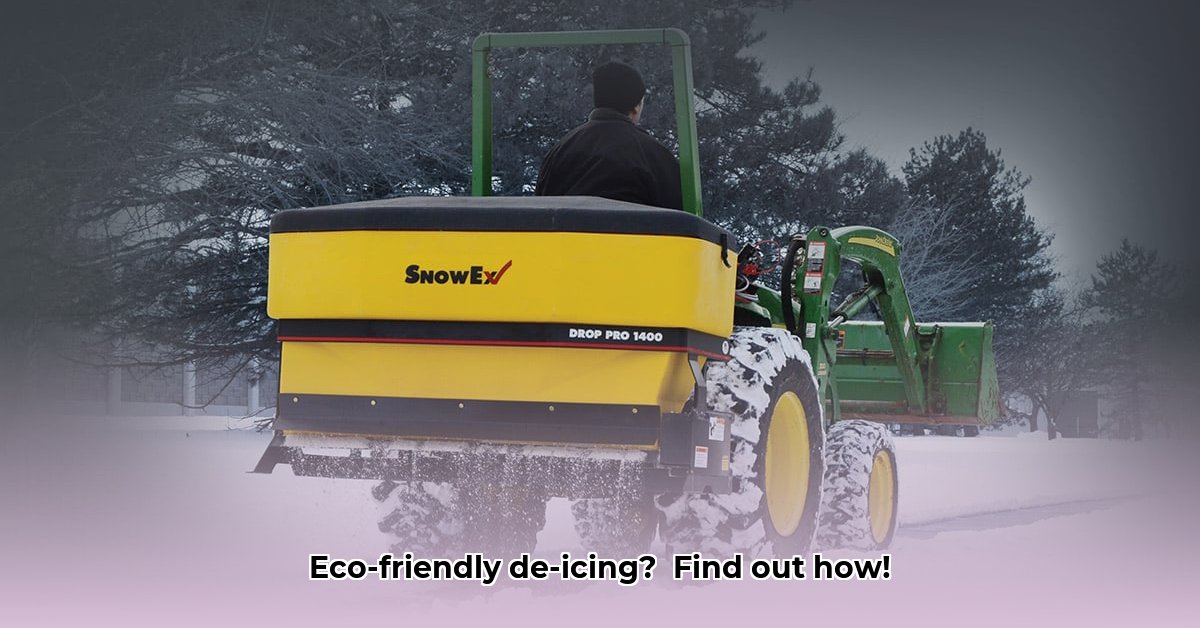
Precision salt spreading offers a sustainable alternative to traditional methods. Modern equipment, such as the SnowEx Drop Pro 1400, uses digital controls and drop spreader technology for targeted application. This advanced technology allows for precise salt distribution, reducing the overall amount needed while ensuring effective ice control. The precision offered by these systems dramatically reduces the volume of salt used, thereby minimizing environmental impact and promoting responsible resource management.
How to Master Your Tractor-Mounted Salt Spreader: A Step-by-Step Guide
Efficient utilization of precision salt spreaders requires careful planning and execution. Follow these steps for optimal results:
Calibration: Accurately calibrate your spreader according to the manufacturer's instructions. Precise calibration ensures consistent salt distribution, preventing over-application and waste. Regular calibration checks are essential for maintaining accuracy throughout the de-icing season.
Salt Selection: Consider the environmental impact when choosing your salt. While calcium chloride melts ice more quickly, it can be more damaging than rock salt. Select a salt type that balances effectiveness with environmental responsibility, always reviewing safety and environmental data sheets before application.
Strategic Application: Apply salt only where absolutely necessary, focusing on icy patches and high-risk areas. Avoid blanket spreading. Targeted application significantly reduces the total salt needed, minimizing environmental impact and enhancing overall cost-effectiveness.
Continuous Monitoring: Regularly monitor salt levels and equipment function. Consistent checks ensure accurate distribution and prevent costly over-application. This proactive approach ensures efficient salt usage and minimizes environmental consequences.
Post-Application Review: After each application, review your work. Identify areas requiring adjustments for future applications. This iterative process helps optimize application techniques and reduces environmental impact over time.
Exploring Greener Alternatives: Beyond Traditional De-Icers
While improved salt application techniques offer considerable advantages, completely sustainable road maintenance requires exploring alternative de-icers. Beet juice, a bio-based de-icer, is gaining attention due to its lower environmental impact. However, its effectiveness might be limited in certain weather conditions, making it potentially necessary to supplement with other de-icing agents. Ongoing research and development are crucial in identifying and optimizing the use of more sustainable options.
Risk Assessment and Mitigation: A Proactive Approach
Even with precise application methods, risks remain. This matrix details potential issues and mitigation strategies:
| Technology/Practice | Probability of Failure | Potential Impact | Mitigation Strategies |
|---|---|---|---|
| Precise Salt Spreading (SnowEx) | Low | Localized soil salinity; minor water contamination | Regular soil testing; targeted application adjustments; using lower concentrations |
| Traditional Salt Spreading | High | Widespread soil and water contamination; ecosystem damage | Stricter regulations; promoting alternative de-icers; public awareness campaigns |
| Beet Juice De-icer | Medium | Potential for less effectiveness in extreme conditions | Supplementing with salt as needed; advanced weather forecasting |
Navigating the Regulatory Landscape: Compliance and Future Directions
Regulations regarding road salt use are continually evolving. Many jurisdictions are imposing stricter limits on application rates and types. Staying informed about these changing regulations is crucial for compliance and responsible environmental stewardship. Collaboration with regulatory bodies is vital in shaping future policy and promoting sustainable practices.
Actionable Steps for Stakeholders: A Collaborative Commitment
Sustainable road de-icing demands a collaborative effort. Here’s how different stakeholders can contribute:
| Stakeholder Group | Short-Term Actions (0-1 Year) | Long-Term Actions (3-5 Years) |
|---|---|---|
| Farmers/Landowners | Monitor soil conditions; work with road agencies to improve maintenance practices. | Implement strategies to mitigate salt damage; seek compensation for losses (if appropriate). |
| Road Management Agencies | Pilot programs with precision spreaders; public education campaigns. | Invest in research and development of sustainable de-icers; stricter application rules. |
| Environmental Agencies | Monitor water quality and soil health; enforce existing regulations. | Support research on alternative de-icers; advocate for stronger environmental protections. |
| Equipment Manufacturers | Design and develop more efficient and environmentally friendly equipment. | Collaborate with researchers to optimize spreader designs for various de-icers. |
Conclusion: A Path Towards Sustainable Winter Road Maintenance
Balancing safe roads with environmental protection requires a multi-faceted approach. By embracing the principles outlined in this guide, stakeholders can work together to minimize the negative impacts of road salt, safeguard agricultural lands, and promote sustainable winter road maintenance practices.
[1]: (Replace with a relevant scientific citation)